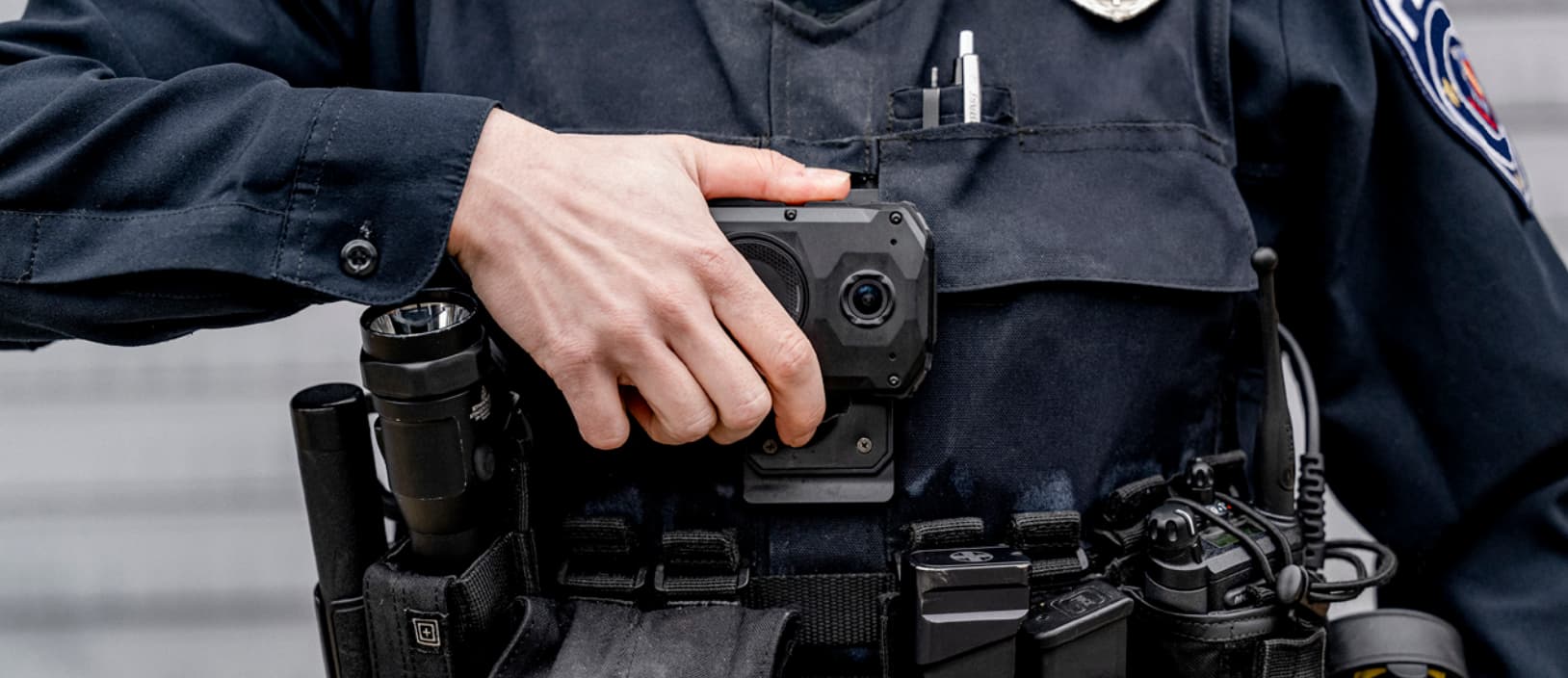
An AI-powered report-writing system used by Utah police generated an official police report stating that an officer transformed into a frog during a call—a bizarre hallucination caused when the AI picked up audio from a Disney movie playing in the background. The incident, discovered in late 2025, has become a stark demonstration of the risks of deploying generative AI for official law enforcement documentation, raising fundamental questions about accountability, accuracy, and the reliability of evidence in the criminal justice system.
Two Utah Police Departments Experienced AI Report Failures with Frog and Harry Potter Movies
The primary incident occurred at the Heber City, Utah Police Department, which began testing AI software in early November 2025. During a real police call, Disney’s 2009 film The Princess and the Frog was playing on a television in the background. The AI report-writing software, designed to transcribe body camera audio and generate police narratives, incorporated the movie’s dialogue into the official report as if it were part of the actual incident.
Sergeant Rick Keel told Salt Lake City’s Fox 13 News: “The body cam software and the AI report writing software picked up on the movie that was playing in the background, which happened to be ‘The Princess and the Frog.’ That’s when we learned the importance of correcting these AI-generated reports.”
A second, related incident occurred at the West Jordan, Utah Police Department prior to October 2025. In this case, Harry Potter was playing in the background during a police interaction. Heber City Police Chief Parker Sever learned about it from his son-in-law who works at West Jordan PD and quoted the AI-generated report at an October 21, 2025 City Council meeting: “And then the officer turned into a frog, and a magic book appeared and began granting wishes.” The chief explained, “It was because they had, like, ‘Harry Potter’ on in the background. So it picked up the noise from the TV and added it to the report.”
Axon’s Draft One AI Software Powered by OpenAI Was Responsible for Hallucination
The AI system at the center of these incidents is Draft One, manufactured by Axon Enterprise—the same company that produces Tasers for law enforcement. Draft One is powered by OpenAI’s GPT large language models and processes body camera audio (not video) to automatically generate police report narratives. The software promises to reduce report-writing time by 50-82%, with some officers claiming to save six to eight hours weekly.
How Much Do Police Departments Pay for AI Report Writing Software?
At the time of the incident, Heber City was simultaneously testing Draft One alongside Code Four, a competing product created by George Cheng and Dylan Nguyen, two 19-year-old MIT dropouts. Draft One costs approximately $400 per officer per month with add-ons, while Code Four runs just $30 per officer per month—a cost differential that was steering Heber City toward the cheaper alternative.
Axon’s product manager Noah Spitzer-Williams has stated the company turns down the “creativity dial” to reduce hallucinations, explaining they have “access to more knobs and dials than an actual ChatGPT user would have.” However, the frog incident demonstrates these safeguards failed to prevent the AI from treating fantasy movie dialogue as factual police observation.
The Discovery Reveals Fundamental AI Transparency and Accountability Problems
Officers at Heber City discovered the error during routine review before submission—the expected safeguard. Yet this near-miss exposed deeper structural problems with AI police reports. A July 2025 Electronic Frontier Foundation investigation found that Axon deliberately does not store original AI drafts, making it impossible to determine which portions of any given report were AI-generated versus written by officers.
Axon’s product manager confirmed this is “by design,” explaining: “The last thing we want to do is create more disclosure headaches for our customers and our attorney’s offices.” The EFF concluded that Draft One “seems deliberately designed to avoid audits that could provide any accountability to the public.” When errors, biased language, or inaccuracies appear in reports, the investigation found, “the record won’t indicate whether the officer or the AI is to blame.”
Which Police Departments Have Banned AI Report Writing After Failures?
The frog incident prompted the Summit County Sheriff’s Office to discontinue Draft One after completing a 90-day trial, citing insufficient time savings. The Anchorage Police Department made the same decision. Perhaps most significantly, the King County, Washington Prosecuting Attorney’s Office formally barred police from using AI to write police reports, stating: “We do not fear advances in technology – but we do have legitimate concerns about some of the products on the market now.”
Legal Experts Warn AI Police Reports Create Corrupted Evidence and Accountability Gaps
The incident has galvanized concern among legal scholars and civil liberties organizations. Professor Andrew Ferguson of American University, author of the first law review article on AI police reports, warns that “automation and the ease of the technology would cause police officers to be sort of less careful with their writing.” He emphasizes that police reports “are sometimes the only memorialized account of an incident” and that criminal cases can take years to reach trial, making accuracy critical.
Ferguson’s article in the Northwestern University Law Review, titled “Generative Suspicion and the Risks of AI-Assisted Police Reports,” identifies a fundamental problem: AI-assisted reports create a “Mad Libs” of suspicion where officers simply fill in blanks rather than constructing narratives from their own observations. His analysis catalogs issues including transcription errors, hallucinations, bias, and the uncertain impacts of generative prompts on legal proceedings.
The ACLU has formally stated that “police departments shouldn’t allow officers to use AI to draft police reports.” Senior Policy Analyst Jay Stanley explains that AI threatens to create what he calls “memory contamination“—when officers review AI drafts before writing reports, the AI’s version can reshape and corrupt their independent recollection. “If the police report is just an AI rehash of the body camera video,” Stanley notes, “then you no longer have two separate pieces of evidence—you have one, plus a derivative summary of it.”
The EFF’s Matthew Guariglia offered the bluntest assessment: “Police should not be using AI to write police reports. There are just too many questions left unanswered about how AI would translate the audio of situations, whether police will actually edit those drafts, and whether the public will ever be able to tell what was written by a person and what was written by a computer.”
Technical Failures Explain Why AI Generated Impossible Officer Transformation Claims
What is AI Hallucination and Why Does It Happen in Police Reports?
AI hallucinations—confident but false statements—occur because large language models predict statistically likely word sequences without understanding reality. The frog incident perfectly illustrates this failure mode: the AI processed the movie’s audio as contextually relevant data rather than background noise because it lacks the ability to distinguish between actual police activity and entertainment.
OpenAI’s own 2025 research acknowledges that “hallucinations are plausible but false statements generated by language models.” The company explains this partly results from training incentives: models are rewarded for guessing rather than admitting uncertainty, much like a multiple-choice test where guessing beats leaving answers blank. Anthropic’s 2025 research identified internal “inhibition circuits” that should prevent models from answering when information is insufficient—but these circuits can fail, generating plausible-sounding fiction instead.
The frog incident exposed several interconnected technical problems. AI systems cannot distinguish relevant from irrelevant audio in chaotic police environments. They have no mechanism to verify claims against physical reality. And as Boing Boing’s analysis noted: “The system flagged a human being as an amphibian, logged it, and moved on, because that is what happens when you give pattern recognition software authority without insisting it understand reality.”
How do AI police reports work?
AI police report software like Axon’s Draft One processes body camera audio using OpenAI’s GPT language models to automatically generate police narratives. The system transcribes audio and creates report text designed to save officers 50-82% of report writing time. However, the technology cannot distinguish background noise from actual incidents, leading to hallucinations.
Regulatory Responses Emerging as AI Police Report Adoption Outpaces Oversight
California’s SB 524, signed by Governor Newsom and effective January 1, 2026, represents the most comprehensive regulatory response. The law requires all AI-assisted police reports to be marked as AI-written, mandates audit trails identifying who used AI and what footage was analyzed, requires retention of the first AI draft for as long as the official report is kept, and prohibits AI drafts from constituting an officer’s official statement.
Utah became the first state to require disclosure of AI assistance in police reports. The Policing Project has published a model statute requiring police to disclose AI use, maintain public policies on AI in criminal investigations, and ensure disclosure to prosecutors and defendants. The DOJ COPS Office published federal guidance on AI report writing in January 2025.
Despite these emerging guardrails, AI report writing is spreading rapidly across police departments. Palm Beach County Sheriff’s Office generated over 3,000 reports between December 2024 and March 2025. Fort Collins, Colorado reported an 82% decrease in report-writing time. Departments in Oklahoma City, Lafayette, Tampa, Boulder, and dozens of others are implementing the technology—often faster than oversight mechanisms can develop.
Similar AI Hallucination Incidents Reveal Pattern of Failures in Official Documents
The frog incident is not isolated. Deloitte faced twin scandals in 2025: a $290,000 report for the Australian government contained fabricated quotes from a federal court judge and citations to nonexistent academic papers, while a $1.6 million healthcare report for Newfoundland and Labrador contained false citations and invented papers attributed to real researchers. In both cases, Deloitte disclosed that Azure OpenAI was used and issued refunds.
The legal profession has been similarly affected. In the landmark Mata v. Avianca case in 2023, a New York attorney submitted a brief containing six fabricated court cases generated by ChatGPT. Professor Eugene Volokh of UCLA Law School now tracks AI hallucination cases in litigation, having identified 727 cases involving hallucinated content. Chief Justice John Roberts warned in his Annual Report on the Federal Judiciary about AI’s “shortcoming known as ‘hallucination'” that leads to citations of nonexistent cases.
Civil rights activist Aurelius Francisco of the Foundation for Liberating Minds offered a structural critique: “The fact that the technology is being used by the same company that provides Tasers to the department is alarming enough. Automating those reports will ease the police’s ability to harass, surveil and inflict violence on community members.”
The AI police report claiming an officer transformed into a frog stands as a cautionary tale about deploying generative AI in high-stakes documentation. While the error was caught before filing, it revealed systemic problems: AI that cannot distinguish fantasy from reality, deliberate design choices that eliminate accountability trails, and adoption that outpaces regulation. The incident has accelerated legislative responses and prompted some departments and prosecutors to reject the technology entirely. As Professor Ferguson posed the fundamental question: if police reports simply echo body camera footage through AI, “why do we have officers testify at all?” The frog hallucination may have been absurd, but the underlying failures it exposed threaten the integrity of evidence that determines liberty and justice in criminal proceedings.